Episode 16: Lebo!
Lebo plays an acoustic guitar with a magnetic pickup in it, through an amp, in a rock band – and the body behind the bridge keeps hearing the whole room.
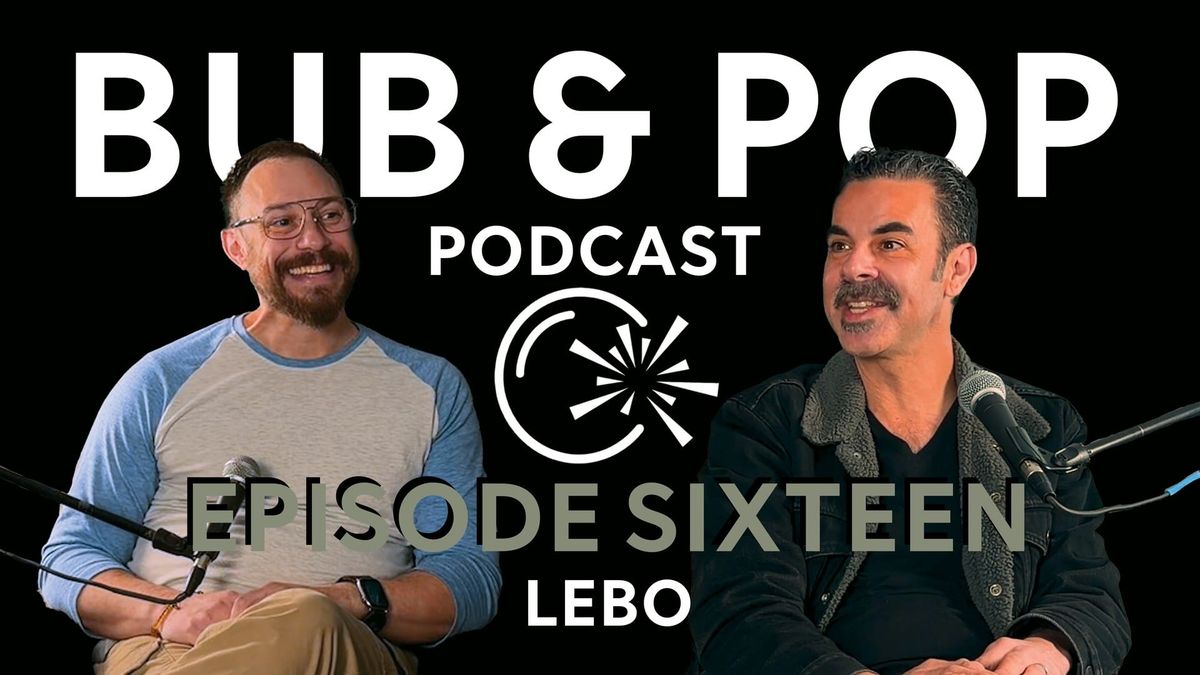
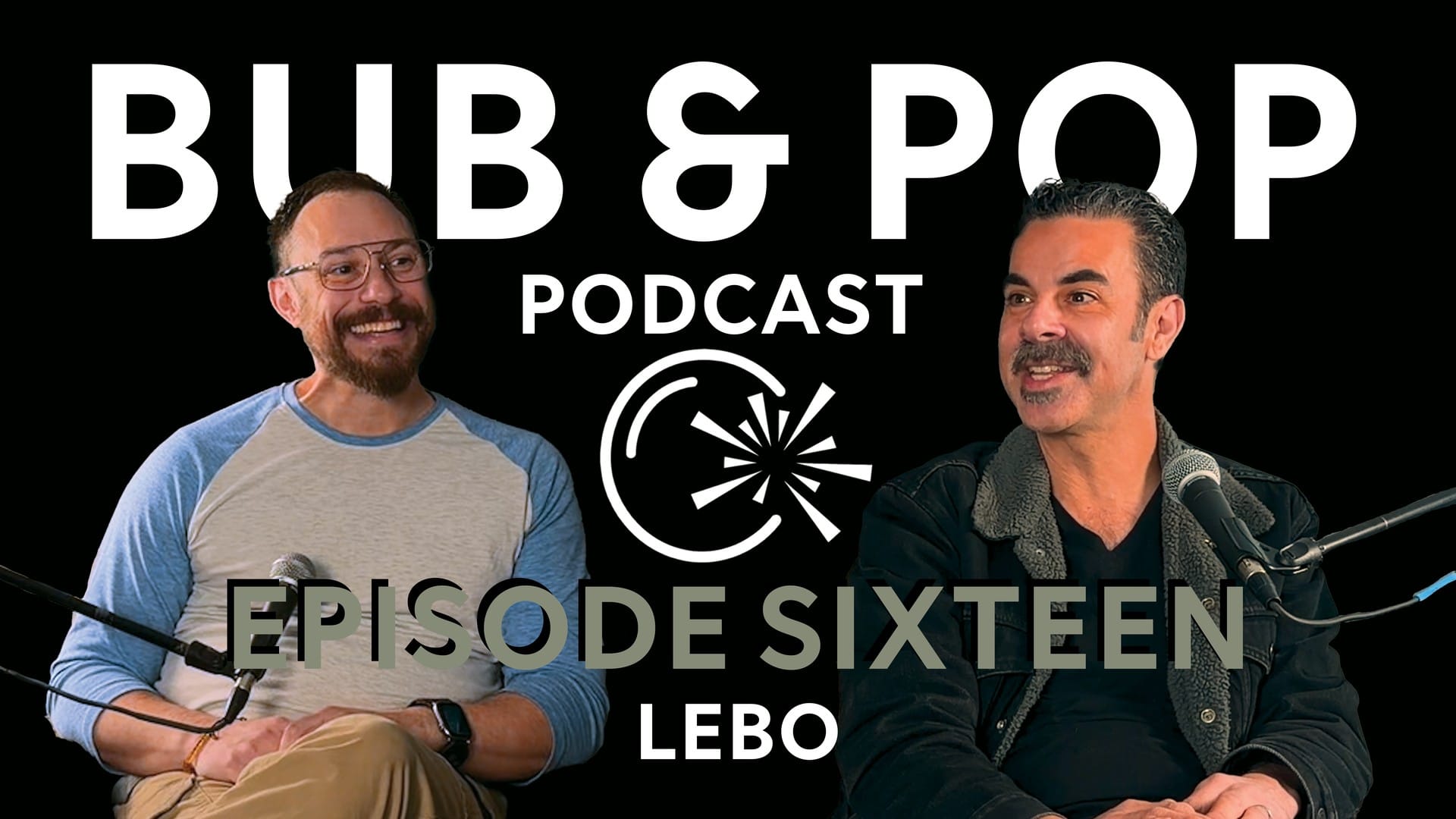
Bub & Pop | Episode 16: Lebo (recorded May 9, 2026)
Our guest this weeks is Lebo, a great musician and guitarist, and cool AF – I really enjoyed our conversation, especially how it branches way out beyond music...or uses music as a jumping off point to talk about life, the universe, and everything...
Lebo plays an acoustic guitar with a magnetic pickup dropped into it, through an amp, in a rock band. If you know anything about guitar electronics that sentence should bother you a little. It works because the body behind the bridge stays microphonic – the guitar is hearing the whole room and feeding it back through the strings.
He can prove it. On an ALO cover of “I Shall Be Released” cut with Jack Johnson, there’s an ethereal wash under the piano intro that nobody played. Lebo’s hands weren’t even on the instrument: it was the piano, in E against a take in B, activating his strings from across the room.
He met Zach Gill and Steve Adams in seventh grade in Saratoga, California, back when the orchards were still turning into Apple buildings. The band they started at twelve is ALO, and it’s still going. Their first gig was a talent show that turned out to be a school play, and they only got to play because the production was short on boys.
The back half goes somewhere else entirely. Lebo describes a Venn diagram he lives by – discipline on one side, all the prep and the set lists and the hours at home with guitars lying around; surrender on the other, where you walk over the threshold at 7:59:59 and let all of it go. Either half alone, he says, is necessary but not sufficient. The overlap is flow. From there we got to what Phil told him backstage at Terrapin Crossroads – that the point isn’t to put something into the music, it’s to let the music pull something out of you – and to why Edward Van Halen’s beat-up, drilled, tape-marked guitar looked better to a kid flipping through Guitar Player than anything clean on the shelf.
Also in here: St. Vincent’s favorite guitar solo; the Lebo solo that grabbed my attention in 2006 and hasn't let go since; and the solo on “Plastic Bubble” that Lebo begged the band to let him fix and is now glad they didn’t.
Not sure if you knew it, but we release an audio-first version of the show available wherever you get your podcasts. At the recommendation of my old friend UB, I started recording audio intros and outros there that aren't present on YouTube or social media. I used to drive a lot and have listened to a ton of podcasts over the years, and it occurred to me that those monologues were how I feel like I got to know the host. And whether I wanted it or not, the guy I got to know best was Marc Maron, who ended his WTF podcast last year. That may be why my intros lean a bit stream of consciousness – that's the way his were, and while we don't necessarily talk about a lot of the same stuff, I think it helps paint a fuller picture of who we are and how we think.
I share all of this because on this week's intro, I talk about AI, I find that term extremely vague and not particularly instructive these days – though that doesn't stop people from having strong opinions about it. I guess I have strong opinions about it – I think it can be really interesting and helpful, and I feel like most people aren't exploring it in ways that help them understand them. Over the last six or so months, I've spent a ton of time with prompts, agents, loops, and graphs – sometimes it feels like I spend more time fixing the machine than I do using the machine...but when it works, it works extremely well.
It helps me do a lot of things more quickly and easily, sometimes with prompting and increasingly without – you'll have to listen to the audio intro if you want to hear one concrete use that's a MAJOR time saver for both me and Producer Tedd. And I don't feel like it's interfering with my creative process – if anything, enhances it. (I won't go so far as to call what I do art – but I'm not not calling it that. If you recall, I'm also the novice podcaster who just compared himself to Marc Maron.)
I'll probably talk more about that in coming weeks – think I'm going to use this space to write something more akin to a weekly newsletter. Thanks for the likes and follows and to those who have reached out to say hello.