
Episode 9: Silas Herman
Mandolinist Silas Herman on growing up around Leftover Salmon, cutting his teeth with Kitchen Dwellers, and his own band the Tone Unit — recorded in Denver.
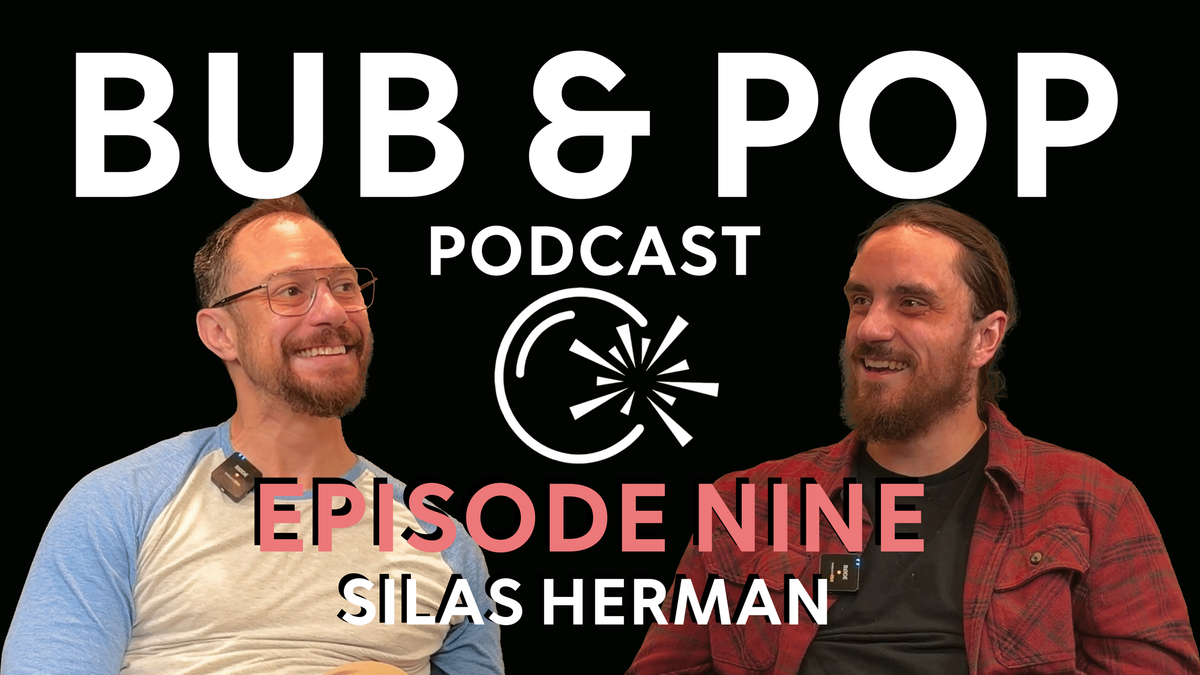
Bub & Pop | Episode 9: Silas Herman (recorded January 23, 2026)
Join music journalist Matt Hoffman for a conversation with Silas Herman, a rising star in the jamgrass world. His last name likely is familiar to fans of Leftover Salmon, co-founded by his father Vince. We caught up in Denver, when he opened for Kitchen Dwellers at Cervantes Masterpiece Ballroom, and had a wide-ranging conversation about growing up Salmon, cutting his teeth with the Dwellers, his growing family, and his excellent band, the Tone Unit. Silas is a phenomenally sweet guy, and it was nothing short of an absolute pleasure to speak with him.
An audio-first version of this podcast is available here.
Silas Herman | Website | YouTube | Instagram | TikTok | Facebook
Bub & Pop | Website | YouTube | Instagram | TikTok | Facebook | X | Threads | LinkedIn | Audio-first |Discord
Host: Matt Hoffman | Producer: Tedd Kanakaris | Location: VentureX LoDo
TRANSCRIPT (minimally QC'ed)
Matt Hoffman [00:00]
Hi, I'm Matt Hoffman, and this is the Bub & Pop podcast where we talk about music, careers in music, life, the universe and everything.
Matt Hoffman [00:20]
On today's episode, I speak with Silas Herman, a rising star in the bluegrass world. When you hear the name Herman in the context of bluegrass, Silas isn't necessarily the first person you think of. That's typically his father, Vince Herman, guitarist and one of the founders of Leftover Salmon. As a kid, Silas spent a lot of time on the road with his dad's band and learned a lot about music and a career in music.
Soon enough, began playing guitar and learning flat picking. Along the way, he started playing his own music, including with Eli Emmett, son of drew, also of Leftover Salmon fame, leading some people to refer to them as the salmon eggs. He also is an active part of the rising generation of new bluegrass.
New grass, jam, grass, whatever you want to call them. Artists. As a part of moving the scene forward, he has formed a phenomenal band called the Tone Unit. I had the pleasure of reviewing Silas's set as part of a review of The Dwellers Run that I wrote for leave for Live Music, and when I asked Silas if he would be interested in talking on the podcast, he was all about it.
I really enjoyed the conversation with him. So without further ado, my conversation with Silas Hearn.
Silas Herman [01:39]
Tell tell me your story. Uh, or where it begins, where it is now. How do you want to start? Man? Holy cow. Where to begin? I mean, yeah, I was born into the music industry, you know, from from the very beginning, my dad with, uh, leftover salmon. Leftover salmon was really kind of starting to take off. Like, right around when I was born, they were doing probably, like, 250 shows a year or something like that.
So really grinding it out, um, but, you know, because of that, I got to grow up at like all these different festivals going all these different amazing shows, getting to just be around all this amazing music that I feel like kind of just subconsciously sort of seeped its way into my, uh, my mind and my soul and my heart.
And, uh, then, you know, when I was as I got older, I kind of found my own passion for music, kind of as, like, a young teenager, um, specifically kind of at the Rocky Grass Festival, picking tunes there. I found a bunch of people that were, like, my age, and I felt like I could really it kind of became cool to play music again.
And then I started really diving in at that point and starting to, you know, flat pick on guitar a lot and play the mandolin a lot more. And then, uh, when I was like 17 years old, uh, I started the band Gypsy Moon with, uh, my ex at the time and, uh, kind of just right out of high school, went right into touring with that, um, pretty heavily for like seven years.
And then that kind of, uh, went down in flames, more or less. And then I kind of leaned into a working in the audio industry a bunch, doing, um, sound gigs. I did front of house for, uh, the High Hawks and was the production manager, put the Caribou Room venue in Nederland for a long time and started kind of touring around with bands and getting into like mics in front of house and doing studio work and stuff like that.
And then, um, yeah, maybe. And then, you know, like last year I got hit up for the, uh, to do this kitchen dwellers run. And, you know, I'd, I'd still been playing a fair bit. I was out with, uh, my dad's band, the Vince Herman Band. We did a couple of tours, like, over the years, but I'd never like, you know, I hadn't been really consistently in a project.
I kind of just been doing sideman stuff and filling in. Um, and then I got that call, and it was the first time I'd been, like, consistently on the road nonstop for, like, you know, um, a good chunk of time. And it really kind of just lit this fire inside of me that I'd never really, um, felt before. I knew it was kind of difficult when that ended.
It was kind of like an abrupt, um, stop just because it went from, you know, the consistent schedule of shows all the time to kind of just, uh, nothing having nothing on the schedule. And I could kind of like, uh, put a bunch of my audio jobs on the side because of that. So I was like, oh my God, what am I going to do with my life now?
And, um, you know, I was looking at potentially becoming a dad and thinking about that and just trying to kind of get every, everything together. And, um, I felt like it was time to start, like, really, uh, putting my music out there. Um, because that time with the dwellers really just, like, inspired me to write a lot of music, too.
And then, right coming off of that, I've written, like, more songs in the last year than I did in, like, my entire life leading up to that phase. Um, so I felt like it's really time for me to just kind of get that out there. So I put this band together of people that, um, are just really incredible musicians. Uh, Matt Cantor, the bass player I played with, um, in that Gypsy Moon band back in the day.
So we've been playing together for many years. He's a boulder. Um, he's also, like, really, um, amazing gypsy jazz guitar player. And then, uh, Jack Cloonan has been one of my best friends for a long time. We've done a bunch of duo shows and stuff. So he plays guitar in the band. Um, Sam Armstrong, Zika Foose, um, who played banjo with the Little Smokies for whiles, and they're one of the best bands of players I've ever played with in my life.
He's totally like the glue to the band. And then, uh, we have this rip and fiddle player, Carson McKinney, who I went to the New England Conservatory and moved out here from Boston a couple of years ago. Wow. Yeah. So I'm on Instagram, actually, and saw a video of him, and I was just like, oh my God. Like that's something just resonated.
And I was like, oh my God, that's my fiddle player. And I sent him a message and uh, he was like, oh yeah, I'd love to jam. And it kind of just very naturally is a progression from there. But he has an awesome band called, uh, High Horse two that he tours with. So they're they're super awesome. Oh, cool.
Matt Hoffman [05:47]
Also based here.
Silas Herman [05:48]
Out of, uh, no, they're based out of, uh, East Coast, like Boston area. So yeah, he goes and tours with them too. Oh, cool. Yeah. Well, so tell me about songwriting.
Matt Hoffman [05:58]
You know, it sounds like coming off The Dwellers. That was something you really leaned into.
Silas Herman [06:01]
For sure. Yeah. I think their songs really, like, inspired me. Um, just because. Sort of like the uniqueness and originality of their songs or, and like the ways that the chords for grass and all that, um, is very much just kind of their own. It's like they use, you know, all songs use the same sort of formula, but the way that they just put it together and the way that they kind of fearlessly are just themselves and the way that their fans just like, love that so much.
I don't know, it's hard because I always, uh, have had like a really high put a lot of pressure on myself of like, oh, the things need to sound so good and be this and that. And it's like, sometimes that can box you in when you're playing and you forget that music is about being free and having fun and just like expressing yourself and it's about emotion.
And that my time with them really kind of reminded me of that. And then just the way that they kind of craft their songs and their lyrics and all that, just like I felt like I could do that kind of for the first time. Like, I've been writing songs my whole life, but I never had the confidence or something to put it out, and I kind of just like said, screw it and started just writing a bunch of songs.
Um, and for me, it's actually turned into like, this really amazing sort of, uh, therapy. It's been like a really emotional thing for me where I've been diving into a lot of things within myself and my relationship with my dad growing up in the dynamic of that and him being a musician and gone all the time, and now me becoming a dad and living out just all these crazy patterns.
Um, but yeah, for me, like just music in general is all about, um, kind of like just emotion. And I know that when I've been in my darkest sort of places, people's songs and writing songs was kind of been what's pulled me out of that. So, um, I just feel like if maybe even just like one person, like, has that experience with of my songs or something that makes it all worth it?
Absolutely. So I guess, yeah, that's kind of why. I mean, let's bring us home.
Matt Hoffman [07:59]
What some of the music that's resonated with you during either. Well, just in general, or maybe when you're having a rough patch.
Silas Herman [08:06]
Oh man, so many things. Um, I've been listening to a lot of Andrew Marlin's stuff, like watch House. I love like, kind of like very moody things like that. But then also just like hardcore rip in bluegrass, like Mash kind of stuff when you just like, need to, you know, get a little something out. Oh, yeah. Kept up and then, um.
Yeah, man, I'd love like, a lot of the artists I grew up around, like, Dan Rodriguez is one of my favorite songwriters, and I got to grow up next to him. When I was a kid, he literally lived, like next door to me when I was about 13 years old. That was where dad lived in Nederland.
Matt Hoffman [08:42]
So did he. Did you ever, uh, did your family ever tour while your dad was on the road?
Silas Herman [08:47]
Yeah. For sure. Yeah, we definitely did. Yeah, we went to a lot of festivals and, uh, and things like that growing up, and that I was homeschooled until, uh, middle school. Oh, wow. So I spent a lot of time traveling around on the road. Oh, super.
Matt Hoffman [09:01]
Um, what was that like? I mean, being like, do you remember how old you were the first time you were out on the road with your dad?
Silas Herman [09:08]
Oh, man. Um, I mean, some of my earliest memories are being at the Telluride Bluegrass Festival as a little kid. Like playing in that pond right there, kind of as you're walking in. Yeah. Um, and then, you know, bringing my skateboard there. I remember always skateboarding around. That was my favorite, to go to Telluride and skateboard and hit the skate park and stuff.
Um, but, yeah, I mean, we would go all over the place, like, you know, East coast, West coast, um, Mexico, Jamaica. I went to Jamaica a couple times. And, uh, Sam did that thing with little feet there. Oh, wow. Yeah. Um, so, yeah, it was like, definitely a really amazing experience, but also a very unique experience where, uh, I sometimes felt a little, uh, alienated from the rest of, uh, the kids around me.
And I just didn't really have other kids around me, too. Growing up, I grew up in, uh, Eldora, Colorado, which is like a few miles up, uh, west of Nederland, basically up near the divides, like 9500ft. It's a little ghost town knows, like there's me, maybe like 1 or 2 other kids that actually lived there in the whole town.
Um, the town of Nederland, you know, a few miles away, had like more of a, there was like a school and stuff there, but.
Matt Hoffman [10:18]
Sure. Do you know why your folks decided to live in that kind of off the grid spot?
Silas Herman [10:23]
I don't know, but I would guess probably just like the kind of chaos of constantly being on the road and stuff for my dad wanting to have like sort of a retreat away from all that would be would be my guess for sure.
Matt Hoffman [10:36]
Yeah, totally. That totally makes sense.
Silas Herman [10:38]
So but it really growing up there instilled this like amazing connection with, uh, with nature for me, that, um, has really influenced my music a lot too. Um.
Matt Hoffman [10:47]
How so?
Silas Herman [10:48]
Um, just, um, I just spent so much time outside as a kid, like in the forest. And then as I grew older, I felt like I kind of, um, gained, like, a really spiritual connection to nature through all sorts of different things, like plant medicines and, um, different things, but playing music kind of in
Silas Herman [11:13]
nature and in the natural world to me is there's always just been like some kind of soul connection there. And I actually just started this YouTube series. I launched like a week or two ago, that's all just playing acoustic music in nature, basically. Wow. And, uh, my mom was helping me film the other day, and I think we had like, it was we're already a couple episodes in, but it felt like the real premiere of the series to me, she said.
We were at the end of the day, and then she was like, okay, now go play that tree, its song. And, uh, I was like, okay. So I went over and just started kind of improvising for this tree, but it ended up being this, like super emotional thing. And I was like brought to tears pretty much at the end of it.
Matt Hoffman [11:52]
Oh my God. We'll definitely leak out.
Silas Herman [11:55]
To your cool. Yeah. And that video will be coming out soon. Yeah.
Matt Hoffman [11:58]
That's beautiful. Well, so do you consider like do you think of. Well. So I'll put it this way. Like EDM and nature don't necessarily, you know, aren't compatible to me. Like how do you think about. Well and then there could be that's an over that probably an unfair oversimplification. Um, but how do you think about like, nature and bluegrass and, and how they fit together?
Silas Herman [12:20]
Yeah. For me, it's something about the acoustic instruments and the resonance of the acoustic instruments being played in, like the sounds of, like, the birds and bugs and, uh, those melodies that are kind of in the natural world that we kind of pick up on. And then through the acoustic instruments, I think we can, like, kind of become part of that world where sometimes we're so alienated from it in our culture and stuff, and we forget that we are just like part of the natural world.
And I think playing music is a very natural kind of way to express that connection.
Matt Hoffman [12:49]
Yeah. I don't know if you've listened to any read. Matt. Any read? Matt. This is music. Oh, yeah. He cut out an album last year called the Somnium Variations. That's, you know, it's like super mellow, kind of designed to help you fall asleep. Maybe. But he also has these, like, frogs that he recorded in Tulsa 20 years ago just underneath it.
And it's it's perfect. I'll send it to you later.
Silas Herman [13:13]
Please do. Yeah. That's awesome.
Matt Hoffman [13:15]
Well, so I mean, so I remember and I'm not a sports fan, but I remember an interview where Peyton Manning talked about, like, for a while, being kind of Archie's kid and eventually became Peyton. Uh, his dad, Archie, I guess, was a big football player. Um, and I've, I've read about, like, the salmon eggs thing right about you, and, uh, I think it's in Eli.
Yeah. Um.
Silas Herman [13:41]
Yeah.
Matt Hoffman [13:41]
Tell me, tell me about that. Like, how does it feel to. That's unique to you, too? Right.
Silas Herman [13:46]
Man, I love it. It's one of the greatest joys of experience getting to play music with my dad. I believe that it really is. And now that I've become a dad, it just puts it all in a whole nother perspective. And the idea of, you know, playing music with my son and potentially all, you know, all three generations at once, playing music together to mean just, uh, means everything.
Really?
Matt Hoffman [14:07]
Absolutely. I'm like, yeah, I have two daughters who are a little older and yeah, playing music with them, even if they're just like hitting a drum or recording a melody and throw it into Ableton or something. Yeah. It's like there's nothing better than that.
Silas Herman [14:22]
Totally. So, yeah, that connection's been amazing. And then, you know, just being blessed enough to grow up in the music scene has provided me with tons of connections that now that I feel like I'm finally ready to kind of get my band out there and do my things like a frontman, um, I'm able to kind of, you know, um, call, call in on some folks.
Sure. Through the years, I've made relationships with. So that's that's real nice. Well.
Matt Hoffman [14:46]
And kind of, um, I would imagine that somebody who may not have heard your music. Would think, okay, you know Silas Herman, Vince's son, I'm expecting, you know, leftover versus however your identity is developing, how you think about it, how it's playing out, whatever. Um, I guess what would you say to somebody who's really familiar with leftover and not with you?
What what should they expect when they listen to your music or come to see you?
Silas Herman [15:15]
Man. Well, I think, um, you know, we're definitely focused on, um,
Silas Herman [15:21]
playing our instruments as well as we possibly can. So for sure, they're incredible. That and, um, original songs. And I think we've actually really been, like, kind of finding our sound. I mean, I would say in general, we're, you know, a bluegrass band, kind of a progressive bluegrass band in the modern New Grass sort of sound with, um, intricate melodies and stuff like that.
But we've really been like diving into writing a bunch of our own songs, and we're kind of Still trying to figure out what exactly we are. A little bit, but I think it's somewhere between like, uh, jam grass and, um, sort of like, uh, progressive bluegrass. I would say.
Matt Hoffman [16:00]
So. Well, so I think of some of the, you know, kind of well established or up and coming bands in that space. You know, guys like green Sky and the dwellers who lean into that space here, you know, more kind of psychedelic, like, you know, wall of noise, whatever stuff. Then you've got guys like Mountain Grass Unit who are just like traditional as hell and fucking killing it.
Yeah. Um, do you guys have, like, an array of stomp boxes in front of you?
Silas Herman [16:28]
We do. We have an array of pedals that we dive into a little more all the time, but we definitely have that traditional edge to. Sure. We all like to have, uh, mix on our instruments to, to kind of capture that, like real sort of natural sound as much as possible. Um, as well as the pickups and we run all the effects through our pickups, so.
Oh, cool. Um, we do that. And, yeah, we do like to dive into some. Some more of the psychedelic jam realm, for sure. Sure. Um, but yeah, it all kind of comes back to, you know, being rooted in,
Silas Herman [17:00]
you know, we're all coming traditional bluegrass players at heart, I think. Um, so a lot of it kind of comes back to that. But we also, you know, growing up in, in the around Sam and it was very rooted in like the the jam scene, Grateful Dead. It's been a huge influence on me. So, um, you know, getting out there is fun.
We like to get out there for sure.
Matt Hoffman [17:21]
I know you mentioned that you started learning guitar and mandolin sort of around the same time. Like, what was that process like for you?
Silas Herman [17:29]
Yeah. Yeah. So, well, I started I mean, I'd always had an instrument in my hand growing up just because there was a bunch around the house and they were always at concerts and stuff. Um, but when I was maybe like 11 or 12 years old, I started, like, taking playing guitar a lot more seriously. And being like, oh, like I want to do this.
And I had some lessons with, uh, John Riddle. Black dog was an awesome jazz player up in that Ireland. Oh, cool. And, uh, he kind of instilled a lot of theory and that kind of stuff in my mind. Um, like, as a really good foundation or young age. And then I just got really into playing guitar, and I pretty much just played guitar until I was maybe like 16 or 17 years old.
And then, um, listening to Christy Lee and Adam Steffy, something about like, the tone of that mandolin I just fell in love with. It just resonated with something inside of me. And I was like, oh my God, like, I want to do that. Yeah. And obviously I was nowhere close, and I'm still nowhere close to being able to sound like either of them at all.
Matt Hoffman [18:27]
But Christy Lee, there's only one. Yeah. Stealing even like the first. Um. Oh my God. Senior moment. I'm forgetting names. The first Nickel Creek album. It's like, what the fuck is that guy doing? Totally. He's. Yeah.
Silas Herman [18:40]
Yeah. Super virtuosic. Yeah. Just incredible. But yeah, something about the sound of the mandolin just really resonated with me. And then, um, you know, my dad being mainly a guitar player is nice to be able to have, like, a different instrument. My brother plays the bass, too, so we did like a family band thing for a while.
So super cool. It was nice to be able to, you know, have a different instrument playing that too.
Matt Hoffman [19:01]
Is your brother out doing it professionally?
Silas Herman [19:03]
I know he lives up in Canada now. Okay. Yeah. So. But, uh, yeah, he's just.
Matt Hoffman [19:08]
Working a real.
Silas Herman [19:09]
Job. Yeah, hanging up there and skiing and. Yeah.
Matt Hoffman [19:13]
Well, so, uh, so tell me then about just the rest of the members of the tone unit. Like, it feels like you've got a Swat team with you.
Silas Herman [19:20]
Totally. Yeah. They're all really seasoned, really incredible musicians that I look up to immensely. Um, for sure. Um, yeah. Jack Cloonan, one of my best friends, the, uh, guitar, they're all they've all become, like, absolute family, like my best friends. That's amazing already for sure. Even in just a year of being a band, we feel like a really intense camaraderie, I think already.
But, um. Yeah. Jack. Um, we've been playing together for a long time. Kind of. Over the last, like, three years, we did a lot of duo shows together. We were like, artists at large at a lot of festivals and stuff like that. Um, so, you know, it was kind of natural that we were going to eventually form some sort of.
Yeah, project, I think. And then, um. Yeah. Sam Zika Foose, Sam Armstrong, Zika Foose, the banjo player, is one of the most incredible banjo players I've ever heard in my life. Um, and I will put him up against any banjo player for sure. Um, very underrated in the in the scene, I think, um, really just incredible person in every way.
Really incredible player.
Matt Hoffman [20:25]
Um, so like traditional clawhammer, he does clawhammer.
Silas Herman [20:29]
He does, um, three finger really well. Play guitar, plays mandolin. Um, plays it all right. Songs, sings really well. There's harmony really well since lead really well all those things. are definitely like the glue for the band, I would say. Yep. And then, uh, Matt Cantor, the bass player. Um, I played with in my old band Gypsy Moon for a bunch of years and that, you know, we kind of grew up in Colorado music scene together, and, um, he's a really amazing gypsy jazz guitar player to actually, we just, uh, recorded and he just recorded an instrumental record that I got to play on.
Oh, wow. That's really cool.
Matt Hoffman [21:06]
Super cool. Tell me about that.
Silas Herman [21:08]
Oh, man. It's it's incredible. Um, it's kind of more like gypsy jazz. Very kind of landscape. Like, it'll be great for, like, movie soundtrack kind of stuff. It's all I could really say about it. There's a Korean and fiddle and, uh, upright bass and guitar mandolin on it, and, uh, it's all his original instrumental compositions.
Oh, wow.
Matt Hoffman [21:30]
So did he play mandolin on that or guitar?
Silas Herman [21:32]
He played guitar on that.
Matt Hoffman [21:34]
Oh, okay. Yeah. So you played.
Silas Herman [21:35]
Yeah, I played the mandolin on that.
Matt Hoffman [21:37]
Gotcha.
Silas Herman [21:38]
Yeah.
Matt Hoffman [21:39]
Um, had you done a lot of the gypsy stuff traditionally.
Silas Herman [21:42]
Well, a little bit with our old band Gypsy Moon. Yeah, that we played together. He kind of had taught me some of that stuff, and I, um, I don't know, something about, uh, my Italian roots. And I think something about that sound kind of resonated with me. But I love playing in that sort of minor, harmonic minor kind of stuff, like.
Matt Hoffman [22:01]
Um, there's a an artist. Um, I don't know if you know Nathan Moor. He's based out of Staunton, Virginia. He's done a bunch of stuff. Sure. He's been starting a gypsy jazz project, and it's like you just get used to weird intervals that, like, you don't typically hear and, you know, your standard, like, Western music.
Silas Herman [22:18]
Totally.
00:22:19.050 — 00:22:19.650 · Matt Hoffman
Is that it.
Silas Herman [22:19]
Helps? Yeah. So, yeah, Matt's just an incredible musician all around. Really incredible bass player. Um, but also incredible guitar player, songwriter, all those things.
Matt Hoffman [22:29]
Super cool. Yeah. So, um, does everybody kind of sing his own song? Everybody contributes songs to the project?
Silas Herman [22:35]
Yeah, everyone has their own original songs. They contribute, and then everyone sings harmony, and then, um. Yeah. And we do. You know, it's great. Now, the sets are probably a mix of, like, half original stuff and then half, um, kind of traditional bluegrass covers and stuff like that. Um, and then, uh, Carson McCain's the last member of the band, the fiddle player who's a really incredibly good fiddle player.
He went to the New England Conservatory in Boston. Um, and yeah, like I said, I met him on a on Instagram. It's all video of his. And I just thought, wow, this is.
Matt Hoffman [23:07]
It's it's wild how.
Silas Herman [23:08]
To person.
Matt Hoffman [23:09]
Know. I mean, there's, um, we interviewed an artist named Tyler Acey from a band called the Tisbury, and they got a they went on tour with Neon Trees because they found them on TikTok or something. Yeah. Um, like, Reed Mathis did a project last year where he found a bass player on Instagram. Like, you know, Primus is auditioning new drummers on Instagram and stuff like, it's like, well, so tell me about songwriting.
Do you do it on guitar? Mandolin? Starting with lyrics, starting with music, Melody.
Silas Herman [23:40]
Man. Um, yeah. So I write, uh, instrumental songs and lyrical songs. I've been writing instrumental songs for a long time, but lyrical songs much more so in the last, like year or so. Um, the instrumental tunes, I mostly write on mandolin and they all start as like melodies, and then I kind of build, uh, chord progressions and arrangements around sort of a bass melody.
Um, um, and then all pretty much all my lyrical songs I write on guitar before bring it into the band, then I'll switch to mandolin. But, um, those usually kind of start, um, more like with the lyrics and then all the lyrics and the melody kind of I'll have sort of a melody in my head with some lyrics that I'll go to, and then I'll try to find the chords that kind of fit over that, and then start building an arrangement and kind of the parts of the songs from there.
Matt Hoffman [24:29]
Do you, uh, you mentioned you'd had a little bit of, you know, jazz training, like, are you thinking about it sort of modal or it's just like, look, this is what I hear. This is what I'm going to make.
Silas Herman [24:39]
A little bit. I mean, it definitely a lot of it. A lot of it's been like very simple actually. My, my songs, but simple with just like a little, a little twist kind of in, in the vein of the dwellers thing, a little bit, um, where, you know, the progressions aren't like super crazy out there. It's a lot of, you know, ones and fours and fives and sixes and kind of typical, uh, progressions you'd hear in bluegrass songs would kind of just put together in a different way that, um, you know, to me, just like speaks to the music.
I think, you know, simple songs and simple lyrics are sometimes the most impactful and profound, actually.
Matt Hoffman [25:13]
Here, here. Um, do you guys do you guys will use in ears on stage? I'm assuming we do. Do you have mics where you're talking to each other or is it all just signals?
Silas Herman [25:24]
Yeah, we have two mics on the back of the stage where we'll go back and we can talk to each other and say, oh, you know, we're deep in a jam or something. We'll say, transition over to this or, you know, or we're out of time. So skip these songs on the set list or yeah, you know, or say, uh, you know, look at that funny hat over there or whatever.
You know, all sorts of funny things get said.
Matt Hoffman [25:45]
Um, are you a fish guy at all?
Silas Herman [25:47]
Yeah. For sure.
Matt Hoffman [25:48]
Like, you know, I love Trey's, like, crazy, weird compositions and stuff, and, like, I love a character zero or something. Just a bad ass, like rock or whatever. There's, uh, you know, I think. I think there's room for all of it. Um, I think you might have mentioned something earlier about a little bit of a, like, sort of pro-gay perspective that you bring to that.
Can you tell me a little about that?
Silas Herman [26:12]
Yeah. I mean, I think just the especially like in our arrangements of the instrumental tunes especially, I think, um, everyone in the band is like a, a pretty virtuosic player on their instruments. So, you know, I think we all just kind of want to showcase, um, that and some of the tunes and that kind of can turn into some really, um, complex arrangements and melodies and stuff.
Matt Hoffman [26:34]
Sure. And then, Um, just kind of live jamming wise. Like, what is it like when you're really just getting out there? Tell me. Tell me what it's like to be doing that.
Silas Herman [26:46]
And it's just for me, it's really just an exchange of energy with the crowd. Um,
Silas Herman [26:53]
yeah. I don't I don't even know that. Well, how else to put it? I think we kind of, um, lose ourselves in the energy of the moment, usually, and, um, kind of allow that to shape the jam and allow the audience and kind of what we're feeling and trying to just sort of let go of all of our expectations and all of our ideas of how these things have to be and sometimes.
Well, everyone in the band is so good at listening. No one's going to just kind of jump on top and say, hey, look at me. Everyone has a way of sort of weaving in and out of each other really well, and no one, um, is like, hey, look at me the whole time, especially in the jams. And I think that those really amazing jams the crowd is equally involved with.
And for me, a lot of the most profound, like moments of feeling connected with people I've experienced were like at concerts in these really deep jams where it feels like just this sort of unified consciousness, kind of creating this unspoken thing. Yeah. How to explain it? Really?
Matt Hoffman [27:57]
Well, no. And, um, like, what was it like? So I saw you with the dwellers at Annapolis Bay. Grass, I guess the year before last. Yeah. Which was. It was amazing.
Silas Herman [28:06]
That was.
Matt Hoffman [28:06]
Awesome. You know, what's it like now that you're a few years later leading your own band? Like, I guess, what? What was the experience of being sort of a semi long term sideman with them versus now doing your own thing?
Silas Herman [28:19]
Yeah, yeah. I mean, it's interesting. It's definitely like, felt like going from, you know, playing the sold out Mission Ballroom to starting a band from scratch, basically from the beginning. Yeah. So it's been, you know, feels like jumping off a cliff a little bit for sure. But, um, we've had such an amazing reception with the band and, um, we had a really amazing roster of festivals last year, and, uh, we just signed on with Madison House to be our booking agency.
Awesome. We have Liz Canning here over there representing us. So she's super awesome. And we're speaking with a couple different management companies. So we're going to be getting some management going on soon. And, um, the reception from the crowds and just like the shows and the moments that we've experienced have really felt like something special.
So I think, yeah, turned into something good. But yeah, it was definitely a stark transition from, you know, sold out shows all around the world flying nonstop every weekend to kind of being like, all right, I'm booking all the shows. I'm in charge of all this. It's time to get get this off the ground, right at the same time as finding out that I'm going to be a father, so.
Matt Hoffman [29:24]
Oh my God. So, um. Well, so have you been, like, traveling and touring and all since you had your son? You said he's 11 weeks old.
Silas Herman [29:31]
Yeah, he's 11 weeks old. Um. We've done. I've left the state one time for a New Year's Eve show with Arkansas at Georgia's Majestic in Fayetteville there, which was just absolutely awesome. Um, but yeah, we've had a couple of other other shows, but we're yeah, I've kind of been on an extended maternity leave this spring, at which point, like March, April, we're going to start really firing it.
Matt Hoffman [29:53]
That's super cool. I mean, you know, life is life, right? So like, well, sidestepping. What do you think about stuff like you get to do it once. Um, and yeah, it's all, uh, there's sort of opportunity cost, right? It's like you could go out on the road, but then you don't get the time with your son. But by spending the time with your son, you don't get the time out on the road.
I will say,
Matt Hoffman [30:19]
you know, being a few years ahead of you with children, like all of the cliches are true about how fast it flies by. Um, and like, don't get me wrong, I don't miss wiping asses and changing diapers and stuff, but like, yeah, there's it's it's, uh, it's a special time. I'm glad to hear you've been spending a lot of it, for sure.
Silas Herman [30:38]
It's so special. And, man, it's flying by already for sure. It's crazy. Yeah, I, uh, family, family always comes first, and it always will for me. Yeah. For sure. And, you know, no matter what the expectation is for me, if this band really blows up for me to tour like family is always going to be the number one thing for me.
Matt Hoffman [30:57]
Absolutely. I remember seeing Van Halen in the 90s, and Wolfgang would run out on stage and hug his dad like it's it's. Yeah, that's, uh. It's beautiful.
Silas Herman [31:06]
Yeah. I hope to be able to turn this into a thing that can, you know, support my family. And, um, I've never wanted, like, a bunch of fame or anything. I just want enough to kind of be able to live a simple life with my family. But I'm hoping that, you know, um, the music that we're about to release and to some of these other avenues, this nature series, I'm just starting, things like that will be able to make it so I don't just have to be out there grinding kind of the way that my dad did.
Matt Hoffman [31:33]
Sure, sure. Tell me about the music. The band was getting ready to release. Yeah.
Silas Herman [31:38]
So, um, we have three singles that we're going to release that are all going to funnel into an EP called The Hallways. Um, and, uh, we recorded them in Matt, the bass players living room, and I engineered them, and I'm mixing and mastering them and, uh, produced them all myself. Wow. So it's been a very big sort of, uh, undertaking, uh.
Matt Hoffman [32:00]
My background as an audio guy. Surely comes in handy there.
Silas Herman [32:03]
Yeah, exactly. And yeah, for, um, for that reason and, you know, kind of I felt like I wanted to fully have my hands all the way in my first, uh, my first things that I release. Um, and also, you know, for financial reasons as well. Yeah. I just decided that that was kind of the best bet, but they've been coming together really nicely.
Um, and the songs really came from a really deep spot, sort of in me, um, emotionally, kind of the, the first one where the whatever train I wrote in potentially like my darkest sort of phase and kind of used music to kind of help pull me out in. The lyrics are just, uh, talking about that pretty much. And I think it's something that everyone's going to be able to relate to, I hope.
Um, but yeah, I don't know. I just, um, I think music right now, I think we need music, like, more than ever in the world with the just current state of affairs, with everything. I think we need to find that connection and that unity again and, um, that love for each other and that love for ourselves and and just hope that we can all do that.
And I think going to shows and supporting musicians and stuff like that and supporting the arts and all, all the ways that people are following, uh, their truth is, um, what, you know, I think is gonna make the future really a beautiful place for our children.
Matt Hoffman [33:20]
That's beautiful. Uh, I can't follow that. That's a wonderful place to end. Uh, Silas, it's been wonderful speaking with you. I really appreciate you taking the time to to come in.
Silas Herman [33:29]
I really appreciate you, too. Thank you.