
Episode 8: Reed Mathis
Bassist Reed Mathis on Jacob Fred Jazz Odyssey, his podcast The Gifts of Improvising, a year of Bob Dylan interpretations, and the legacy of the Grateful Dead.
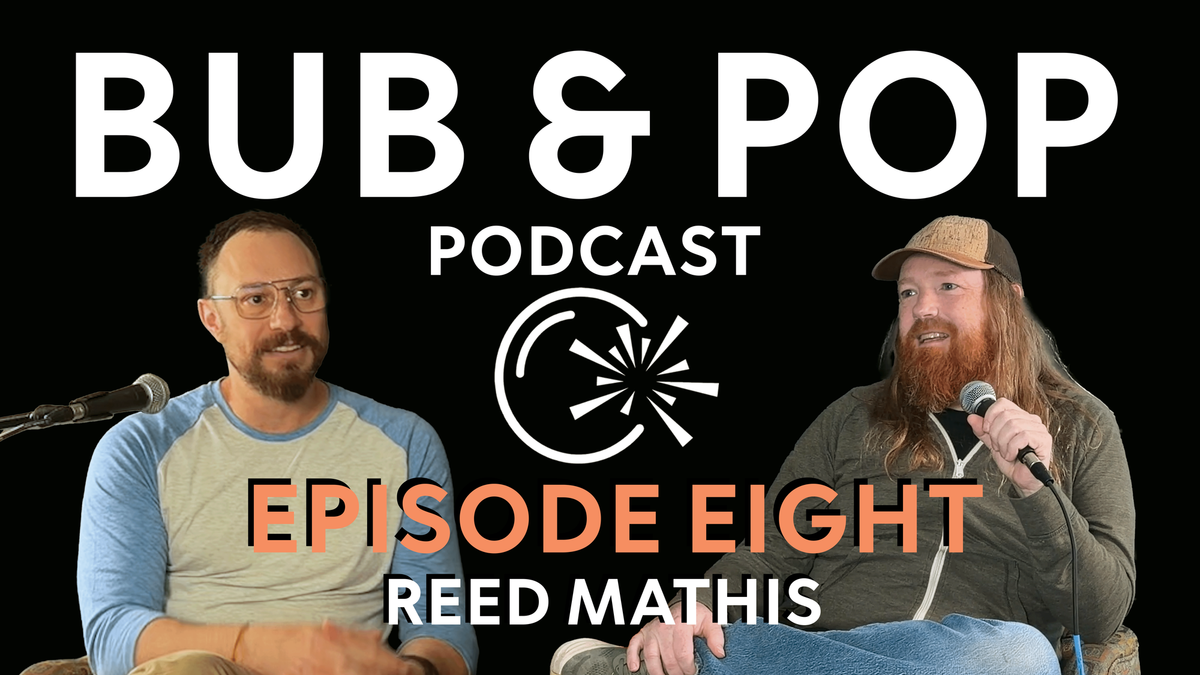
Bub & Pop | Episode 8: Reed Mathis (recorded May 9, 2026)
Join music journalist Matt Hoffman for a conversation with Reed Mathis, a pillar of the jamband community and (IMHO) modern philosopher who expresses his point of view through music. We discuss his forthcoming shows with Jacob Fred Jazz Odyssey, his excellent podcast The Gifts of Improvising, a series of Bob Dylan tunes he released last year, and the legacy of Grateful Dead, among other things. A truly excellent conversation!
An audio-first version of this podcast is available here.
Reed Mathis | Jacob Fred Jazz Odyssey | The Gifts of Improvising
Bub & Pop | Website | YouTube | Instagram | TikTok | Facebook | X | Threads | LinkedIn | Audio-first |Discord
Host: Matt Hoffman | Producer: Tedd Kanakaris | Location: Rising Sun Presents
TRANSCRIPT (minimally QC'ed)
Matt Hoffman [00:00]
Hi, I'm Matt Hoffman, and this is the Bub & Pop podcast where we talk about music, careers in music, life, the universe and everything.
Matt Hoffman [00:20]
Our guest today is Reed Mathis, multi-instrumentalist and founding member of Jacob Fred Jazz Odyssey, who's playing a couple of shows in California before the end of May. So we wanted to prioritize getting this episode out early. We caught up with Reed in Ardmore a couple of weeks ago at Unlimited Devotion, where he's been a fixture for the last nine or so years that the fest has been going on.
And Reed has a long and storied resume consisting of stints playing with Marco Benevento, a number of Bill Kreutzmann projects, including Seven Walkers and Billy and the kids. And he's also put out a series of original interpretations of Bob Dylan tunes related to an excellent podcast he released in recent years called The Gifts of Improvising on the Osiris network.
We're going to link to all of that in the show notes, but we had this excellent conversation and wanted to get it out to you sooner rather than later, so you can hear about all the cool stuff that Reid and Jacob Fred have going on. So check it out and hope you enjoyed it.
Matt Hoffman [01:24]
Well, so where do things stand with the Dylan project? I know the tunes have all been out in the world for a while. It's one of the things I listened to the most last year. Nice. Yeah. Because were. Are you still thinking about putting them all out together? Something got.
Reed Mathis [01:39]
You something?
Matt Hoffman [01:40]
Yeah. The tune. The tunes are great. I sing their praises everywhere. Oh. Right on. Yeah, yeah. And it was cool. Uh, you know, it was cool that I got to connect with Julia through that whole. Through that whole process. Oh, yeah. Yeah, he's. He's just a cool dude. Cool player.
Reed Mathis [01:54]
You guys had a good talk?
Matt Hoffman [01:55]
Yeah, yeah, we did, we did. We haven't met in person yet, but I know he gets to Philly from time to time. Mhm. Um, so. Well, and you know, from your kind of moving from the Dylan stuff, it seems like the Bob Weir project is the next big one. Dead aces.
Reed Mathis [02:12]
I mean I don't know if that's a project. Okay. It's a gig. Okay. Um, I mean, it's one of those things that was kind of put together by the event. Sure. Not by the musicians. Okay. Uh, so I don't know what that is going to be now.
Matt Hoffman [02:26]
Does that what what space does that album occupy in your mind and heart? Ace. Ace.
Reed Mathis [02:32]
I like it.
Matt Hoffman [02:33]
Okay. Um, what do you like about it?
Reed Mathis [02:36]
I mean, it's it's a lot of great tunes, and,
Reed Mathis [02:41]
um, it's that's like, such a cool few years of songwriting for them. If you take, like, Workingman's Dead, American Beauty. Garcia, ace, Europe 72 and wake of the Flood and Mars Hotel are all kind of just just, um. Like, every six months or something there. Um, and those are all, you know, such heavy tunes.
So, um. Yeah. It's great.
Matt Hoffman [03:09]
If you had been putting together the event and you and it was one of those albums that you had to play, which one would you pick?
Reed Mathis [03:15]
I don't know.
Matt Hoffman [03:16]
Do you have a, like, a favorite kind of era of the dead?
Reed Mathis [03:18]
Call it that, that era.
Matt Hoffman [03:20]
Okay.
Reed Mathis [03:21]
Early 70s.
Matt Hoffman [03:22]
Gotcha.
Reed Mathis [03:23]
Absolutely.
Matt Hoffman [03:23]
Yeah. For, uh. Right. I mean, for plenty of people like Europe 72 is kind of the the bar. Actually, I think we just passed. What is it? The almost 50th anniversary of, uh, Cornell 77. Right. Um, I like the I'm not the biggest dead fan in the world, but I actually really like the, like, 73, 74 one drummer era. It's just like it's.
Yeah, it's it's cool.
Reed Mathis [03:47]
Very cool.
Matt Hoffman [03:48]
Yeah. Um, what, uh, tell me about some of the kind of newer, more contemporary music you're listening to. Hmm.
Reed Mathis [03:58]
Am I? Am I listening to any new music? I don't know if I am.
Matt Hoffman [04:02]
Do you get on the King Gizzard train at all?
Reed Mathis [04:04]
I have not. Okay. I've had several friends so into it that they, like, made me playlists of, like, entry points. I don't get caught by it.
Matt Hoffman [04:14]
Mhm.
Reed Mathis [04:15]
I like the new Thundercat album. Um, last year there was a lot of awesome shit. Um, De La Soul's, uh, you know, like,
Reed Mathis [04:27]
the founding member dying put out like, an amazing record.
Matt Hoffman [04:32]
Like, were you on the geese train?
Reed Mathis [04:34]
I can't get into geese either.
Matt Hoffman [04:35]
I feel like it's like, what's wrong with me? Because everybody else seems to love them, but it just. It just didn't work.
Reed Mathis [04:40]
Well, I'm always suspicious when everybody seems to suddenly love something. Yeah. You feel like it's groupthink.
Matt Hoffman [04:44]
Well, did you also hear about, like, the psyop thing where they put just a shitload of money into marketing? Right. Which makes sense, but it's.
Reed Mathis [04:52]
Was it marketing or algorithm manipulation?
Matt Hoffman [04:55]
Well.
Reed Mathis [04:55]
And or is that the same thing nowadays? I don't.
Matt Hoffman [04:58]
Know. I mean, how do you think about just like, getting the word out of the stuff that you're doing?
Reed Mathis [05:04]
Oh, I mean, it's impossible.
Matt Hoffman [05:05]
Yeah.
Reed Mathis [05:06]
It's impossible.
Matt Hoffman [05:07]
Well, because I mean.
Reed Mathis [05:09]
You know, I mean, it's the there's some chicken or the egg there. Um, as far as, like, you know, the the old concept of word of mouth where it's like people hear it, it's dope. So they tell their friends. Mhm. But then it also seems to be like people are telling their friends about. I rarely hear people bring up things that aren't already popular.
Matt Hoffman [05:30]
Mhm.
Reed Mathis [05:30]
These days sure. Maybe it was always this but like uh you know I sometimes I'm like okay so everybody gets into something because it's blowing up.
Matt Hoffman [05:40]
Mhm.
Reed Mathis [05:41]
But it's blowing up because everybody's talking about it. So yeah I don't know, I don't know where it's like the Ouroboros or whatever. Yeah. Um so I don't know I know how it goes. I mean, the ideal thing would be that everybody hears it and tells their friends, you know, or like if there's a show and they can't go like they tell they, they're like, call their friend in that city and go, hey, you got to go see this.
Or, you know, like, but I feel like everyone's so isolated these days. Everyone's in their own little tunnel. Mhm. Um, and there's just less,
Reed Mathis [06:17]
less getting together in some ways and then, you know, and then the huge things get draw all the moths to the porch. Yep. You know I, so many of my friends went and saw all three weekends of the fish at the spear. Mhm. Um, just like they would you know, they couldn't they couldn't help it. It's almost like like uh mandatory.
Matt Hoffman [06:38]
Have you been to the sphere to see them or somewhere.
Reed Mathis [06:40]
No, I saw the Wizard of Oz.
Matt Hoffman [06:41]
Oh wow.
Reed Mathis [06:42]
It was far out.
Matt Hoffman [06:43]
Wow.
Reed Mathis [06:44]
It was like, uh, you know, some. They had extended it into a surround image.
Matt Hoffman [06:51]
Wow.
Reed Mathis [06:51]
Yeah. It's wild.
Matt Hoffman [06:52]
That's really cool. You know, I just learned recently that apparently they're building another theater in Vegas that is, like, specifically designed for the Kiss hologram thing and, like, whatever. Have you heard it? So, uh, kiss has retired from touring as a band. Oh, God. Um, Gene Simmons band is is touring.
Uh, but this is not touring. Um, but kiss is basically using, like, motion capture technology to create a series of kiss holograms. That is the way that Kiss is going to perform and engage with people in the future. Yeah. It's, uh, it's it's something. Mhm. I mean, in some ways it's kind of similar to like the Bob Weir, you know, 300 year thing.
Right. Like how are we going to keep the Dead's music around.
Reed Mathis [07:42]
Oh right.
Matt Hoffman [07:43]
I mean part of how that happens I think this is what guys like you were doing, you know, and like with things like unlimited devotion and just continuing to, I don't know, spread the spread the music like find different ways that people make it interesting because I feel like there are a lot of people who don't make it interesting.
So the ones who do like in my mind, kind of stand out. Um, I mean, you started playing professionally like in the 90s, right? So, you know, the wave didn't like the Napster thing, didn't happen until the end of that decade. And then suddenly you have this period where there's so much music available. That wasn't before that.
I felt like at that time there was more just like, wow, I found this random thing. Oh, I found this random thing versus now, like you said, everybody's kind of finding the same random thing, which means it's not random. It's right. You know, marketing.
Reed Mathis [08:36]
Mhm. Also age though. How old were you then?
Matt Hoffman [08:38]
Uh, yeah I was a teenager, early 20s right.
Reed Mathis [08:41]
Yeah. Between between 16 and 30. Yeah. Um, you know it's, it's a different situation. I was asked to speak at a music school a few weeks ago, and, um, they were like, you know, 19 and stuff. And I just was like, they they were. They asked me a similar question about, like what? Who are some new artists that inspire you?
And I was like, man, I've aged out. Ah, I'm, I'm now because I remember being in my 20s and talking to, you know, musicians I was working with who were this age and being like, you got to check out Medeski, Martin and Wood. You got to check out the slip, you got to check out this stuff. And they would just be like, yeah, I don't know.
It's like.
Matt Hoffman [09:22]
Right now I have enough music.
Reed Mathis [09:24]
And they would put on some shit from the 70s and I'd be like, I don't know. Like, so yeah, I'm, I'm now in that situation.
Matt Hoffman [09:32]
Yeah.
Reed Mathis [09:33]
Where I'm not necessarily hearing about that shit just because it's an age. It's a time of your life kind of sure, you know.
Matt Hoffman [09:41]
Well, there's also, I mean, there's a lot of other kind of stuff to mind. And like, LeBeau and I were just talking about this. You know, the the alternate versions or like the kind of demos or whatever. Like when I think about some of my favorite artists who've passed on, it's like, that's the only way I'm going to hear, uh, like new Van Halen music, for example.
Um, though I, I read something that I'm very conflicted about that, like, it sounded like they're doing some kind of AI thing to, like, try to, I don't know. Yeah, but, like, I mean, I love Van Halen. I want all that I can get, but is that Van Halen? I don't know. I don't know enough about it to to say. But yeah, it's just kind of a weird time that we're in.
So how but how? I mean, it seems like a lot of the projects you're focusing on are original interpretations, sometimes on the spot of like, long standing tunes and, and canon. Right? Whether it be dead, Dylan, etc.. And I'm going to want to circle back to J.F. Mayo, but like, what is it about bringing that take to other people's music that draws you?
Reed Mathis [10:49]
Uh, you know, I mean.
Reed Mathis [10:54]
JFK, like, we, you know, we started in 94 and we were just constantly composing and also, you know, really prioritizing, having a personal approach and having things be true, um, rather than good or whatever. Um, hopefully good, but mandatory. True. And, and so and especially, you know, we kind of sounded like where we were from and when we would go to New York and Philly and LA and Seattle, like, we sounded weird.
What did and what did.
Matt Hoffman [11:30]
Tulsa sound like?
Reed Mathis [11:31]
I mean, it was just it was, um, freaky. Mhm. Um, just more less conformity, um, less people sounding like
Reed Mathis [11:44]
an icon. You know, less people mimicking their favorite artist or whatever. Maybe. Maybe that's. I don't know. It's hard to say. That's what it felt like to me. Okay. But I was there. I was in it, so who knows what it was. But I just know that, like, we were kind of presenting what was, to some people, a new sound, a new approach to improvising, and our tunes were unfamiliar to them.
So we were asking them to acclimate to two new things. And so, you know, that's very brave people are into that. But, um, you know, and then I kind of like, dabbled with playing with groups that were doing a lot of writing, but it wasn't a very new sound. So it was like originals, but like, um, very easy for, for fans to get with and which is good.
But um, so I was like, okay, so they're they're asking them to hear a new song, but it might as if you told me that was a cover of a thing from whenever I would be like, oh, yeah, that makes it sounds like that. So I was like, okay, well, what about the opposite of that, where it's,
Reed Mathis [12:55]
um, material, which is kind of what the the 40s and 50s jazz dudes did, which was like take
Reed Mathis [13:02]
songs that are popular and then apply your method to it.
Reed Mathis [13:08]
Yeah. So, like,
Reed Mathis [13:11]
what if we do the kind of improvising I like on a Beethoven symphony? What if we do it on eyes of the world? What if we do it on whatever? There's like a third aspect that hopefully the two aspects make in the listener, like almost like a hologram or something, or, uh, where it's like they, they're familiar with this piece of music, they hear the interpretation and those two things create.
Reed Mathis [13:39]
This is I mean, what I hope for is like kind of open a world of possibility in their imagination of something beyond the literal, you know? Um, so I don't know that that always happens, but like, sort of like, oh, if you could do that, then you could do this or whatever. As people get older, like I said, like, I feel like they they're less hungry for new things.
Um, they're busy and they often turn to music for comfort, soothing and socializing. And, uh, that doesn't require new music. So,
Reed Mathis [14:21]
in fact, familiar music might be why it's comforting or soothing. And it might. It's easier to get your friends together if everybody already knows the artist. It's harder to get middle aged people to leave the house on for something they haven't heard. So.
Reed Mathis [14:40]
so just trying to be able to do group improvization without asking so much of the audience. Sure. Um, meeting them halfway, I guess.
Matt Hoffman [14:50]
Are there any other? Um, obviously you've done it a lot with dead tunes. There's this Dylan project. Uh, you've sent me some of the just self-study stuff you did with Hendrix projects, and I think Duke Ellington, which was freaking awesome. Um, what what draws you to, like, you call them study? I think that's how you presented some of it to me.
What does that mean to you?
Reed Mathis [15:14]
Sort of. I mean, it's, um. It's more compulsion than study. It's not. Certainly not, um, doesn't feel very voluntary. Um.
Reed Mathis [15:27]
I mean, I'm, I'm looking for, you know, sometimes people talk about, like, getting into music, especially live music, and they're like, they're looking for their people, looking for their tribe. You know, I feel like I'm looking for my people. But in all of history. So, like, you know, you've got that bell curve of of, like,
Reed Mathis [15:48]
um, stuff that's not that good stuff. That's super innovative. And then the middle and then of the stuff that's like super good. Sometimes it connects and sometimes it doesn't. So it might be obscure or it might be, it might be what turns out to be an iconic artist. And so I'm always looking for the sort of outlier people that were really inventing what they did that also connected to a lot of people.
You know what I mean? So, like, I'm, I'm looking for, um, obscure innovators, basically, you know, like a lot of people made innovative shit, but Bjork crossed over.
Matt Hoffman [16:26]
Yes.
Reed Mathis [16:27]
Radiohead, Louis Armstrong, like, you know, all these people, Bob Dylan where it's like, yeah, there were other fascinating people that didn't become stars. So it's not I'm not looking for fame. I'm looking for, like, artists that really connected with people.
Matt Hoffman [16:44]
What do you think it is that makes those artists connect with people?
Reed Mathis [16:48]
That's what I'm trying to figure out. Or at least trying to,
Reed Mathis [16:53]
uh, soak in. I'm not really trying to figure it out. I don't think you can figure it out, but that's the vibration. I like that like tension between something new and connecting so well.
Matt Hoffman [17:05]
And you're the podcast that you released, which I loved, the gifts of improvising. It's the gifts of improvising, right? Not the gifts of playing perfectly, you know, crafted songs. Right? Um, you know, on the one hand, then if you're talking about there's that kind of one level of familiarity with the tunes, the other side of it is just the new, right?
Um, like, how do I guess any thoughts that have occurred to you as you do look to breathe new life into a lot of these songs that people know by heart.
Reed Mathis [17:36]
It's not really breathe new life. It's more like, I mean, I don't know what it is for that from the outside, but subjectively, it just feels like I'm trying to make space for my reality. And my reality doesn't really resemble
Reed Mathis [17:50]
a previous version or whatever. So I'm I'm just trying to be like, find a way that what's actually true for me can be acceptable in, in this sort of in these standards or whatever, you know, and that's what drew me to the Grateful Dead is that originally, at least, it was like very outsider and very freaky and very they were part of that mid 60s avant, um, you know, playing Darkstar for 45 minutes is not something other bands would have done.
You know, hardly anybody, especially not people that were selling really well, like they were somehow able to do like really like songwriter stuff and group improv stuff and really keep both things alive. So I was always like, oh, well, here's the music that everybody that a lot of people can get with that.
A lot of people feel very comfortable in that. A lot of people feel very safe in that also has built in this space for,
Reed Mathis [18:51]
like Kimock told me one time when I was starting to hear the Grateful Dead. Uh, and he was like, well, none of them are really an example of
Reed Mathis [19:01]
how to play, how to use their instrument. Normally they're all kind of like have a very personal approach to their instrument that probably wouldn't even fly in a lot of situations. And, and over the years, I feel like that's gotten a little more standardized, where people are sort of like, well, they play like those guys.
And that's obviously the opposite of what those guys did, which was invent themselves. Yeah. But, um, there's still space at the table for having a personal sound that isn't based on your heroes or whatever. I was like, oh, here's a place I can go where the the songs are already there. And the community that is using these songs, they don't just love the songs, they're using them.
They're going out on a Wednesday night and dancing, you know? Um, but it it also has this, um, it has receptors for the kind of playing that is important to me, which isn't like, it's not like I think it's better. It's like I'm almost like, unfortunately, this improviser, like, it's honestly not very convenient for me or anybody I play with that I'm that I play like I do, but it is what it is.
Yeah. And I
Reed Mathis [20:15]
it's not bad, you know. Um,
Reed Mathis [20:20]
so I'm, I'm just like, trying to figure out how can I be part of a community
Reed Mathis [20:28]
of musicians and music fans and stuff and still be honest. You know, because, you know, I, I feel like growing up, I learned a lot about how to
Reed Mathis [20:40]
fit in at my own expense. Maybe everybody does, you know. Um, but even with sort of unpredictable parents and stuff like, uh, really just sort of like trying to figure out how to not be a problem, um, for other people. And the instrument was the one place where I didn't have to do that. You know, so as I've, you know, become a professional musician and stuff, like,
Reed Mathis [21:10]
you know, any kind of situation that feels like that energy. I was talking to Jackie Greene about this last night. Like, um,
Reed Mathis [21:19]
if I feel that energy of like, well, I. Who I am is inconvenient for the audience or the other musicians, then I, I feel like I need to get out of that situation. You know. So.
Matt Hoffman [21:34]
Well, I remember the podcast wasn't always called The Gifts of Improvising. Right? Weren't you?
Reed Mathis [21:38]
Oh, right. Originally, it was the price of improvising. Yeah, right.
Matt Hoffman [21:42]
What is the price of improvising?
Reed Mathis [21:44]
Um,
Reed Mathis [21:46]
I mean, as far as trying to sell music or sell yourself as a musician, which is what we have to do. Unfortunately, in capitalism, it's like, no matter how pure your music is, you have to sell it to somebody to make a living. So,
Reed Mathis [22:01]
um, you, you know, improvising is, is dealing with the moment, which is inherently challenging. Being alive is challenging you. Even if you had lunch, you're going to get hungry again. Like, it's there's a constant it'll never resolve. It's a constantly unresolved challenge to be alive. And we like to escape that.
And I watch movies and all kinds of stuff and like, listening to, um, a Charlie Parker live recording for the millionth time is very comforting to me. Like the the opposite of unpredictability is comforting, and Improvization is sort of a I feel like a safe container for working with that and like trying to feel some agency in confronting the unknown and the unpredictable and the challenging.
So. So if you're if, if improvising is important to you as a musician, you are basically excluding
Reed Mathis [23:00]
everybody that wants to be comforted, kind of. And that sucks because that is like most, most people, most music fans are want to feel better. And I mean, not that improvisers don't, but improvisers are more like,
Reed Mathis [23:19]
you know, like surfers. If you watch surfers, like, they don't know what the wave is going to do. They don't know where the next wave is coming from. They don't know what size it's going to be. They don't know what speed it's going to be. They just have to be ready and meet the wave. However, it shows up and that's improvising.
Like where you're responding to a force that is beyond your control. And that's what we all have to do all the time. So.
Reed Mathis [23:42]
So the price of improvising is that you are not shielding people from that. And being shielded from that is a lot of why people go to media, you know, and especially if you are someone like me, that that also feels really comforted or
Reed Mathis [23:59]
supported by repetition, like watching the same movie over and over or something, or watching a show that you've seen a hundred times, or listening to a live recording you've heard 100 times or something like,
Reed Mathis [24:13]
um, that's the opposite of improvising. So, you know, so it's, um, having having your song, that kind of sounds the same every time.
Reed Mathis [24:26]
is a very inclusive way to make music. And even if you're going to play something that is supposedly improvised, like Grateful Dead songs, playing them like Jerry and Bobby and Phil and all the, you know, whatever, that is very comforting because it is. It's reassuring. You know what it is people don't like to not know.
Sure. You know, and we all, everybody is in a state of not knowing all the time, and we hate it. Um, so
Reed Mathis [24:54]
it makes sense. It's basically like, do you want to be shielded and protected from that, or do you want to practice coping with it? Improvising is for practicing coping with it. Yeah. You know, and.
Matt Hoffman [25:05]
I think listening to an improvised show is similar in that way as well. Like, um, you know, so I write a lot of concert reviews and sometimes I'll do them. Um, Jonathan Coleman from the bass player stuff.
Reed Mathis [25:18]
Does I like him?
Matt Hoffman [25:18]
He's great. Uh, he was the first episode, uh, first guest on the show. Um, he does this all improvised series. First Tuesday every month. It's called Dungeon crawl. Right, right. And I reviewed one for relics, and it's like normally in my review, it's like, you know, they played this song and this is kind of what it sounded like.
Whatever. It's like I was engaged with it in such a different way than it was. It was a really cool experience to like. I mean, I take stream of consciousness notes when I'm at shows. It was cool to just, like, witness my stream of consciousness notes where it's like, this reminds me of like Lower East Side 97, kind of like MMW stuff, whatever.
Um, it's like, oh, that popped into my head. Like, it's it's that wouldn't have been the same if I were seeing muscle tough tunes. That would have been awesome in its own way. But, you know, there's yeah, there's something to be said for like, really radically leaning into that moment.
Reed Mathis [26:13]
Yeah, yeah. I mean, Jacob, Fred, we used to, um, we for years we would start every show, um, with I mean, we didn't call it really group improvising. We called it, um, composing. You know, um, we were we would always be, like, always composed, never solo, always composed, you know? Um.
Matt Hoffman [26:36]
So what's the difference?
Reed Mathis [26:41]
Uh, you're the intent, you know?
Reed Mathis [26:44]
Um,
Reed Mathis [26:46]
so, I mean, the word solo means alone, you know? Um, so, you know, Kreutzmann told me that, um, back in the day when they were, like, working on Grateful Dead's songs, that Garcia would never say solo. He would say instrumental. Mhm. Like so. Well, verse chorus, verse chorus and then instrumental. Not solo.
I like that, you know. Yeah. And I always thought that was really cool. Like, that speaks a lot to why it's so listenable. Yeah. Um, you know. So. Yeah, I love that. I mean, we, we used to call it Welcome Home. Um, although that was kind of a running joke that had nothing to do with improvising. But for some reason that ended up being how we referred to, okay, um, going just going out and starting to play.
And there would be nights, especially when we were on the road all the time when we would do the whole night. Um.
Reed Mathis [27:39]
But the goal was to have it sound composed. Like, the goal was always that people would be like, what was that second song or whatever? And I was like, we just. We were just going. You know.
Matt Hoffman [27:51]
Now you're playing a couple of shows with Jacob Fred at the end of this month, right? Yes. What? Well, so tell me about those. Just going into them.
Reed Mathis [28:00]
I'm so stoked. We we just did four shows in March, and they were off the hook. Um, we made it. We just made a record, um, 11 new tunes. Incredible. Best shit we've ever made. Wow.
Matt Hoffman [28:13]
Wow. When's that coming out?
Reed Mathis [28:15]
I don't know.
Matt Hoffman [28:16]
Okay.
Reed Mathis [28:16]
But it's all done. Um, I mean, what is what is releasing a record, I don't know. I don't know.
Matt Hoffman [28:22]
When do I get to listen to it?
Reed Mathis [28:23]
I guess I just send it to you right now. Yeah, yeah.
Matt Hoffman [28:25]
We'll talk later.
Reed Mathis [28:27]
But, um, I mean, fuck, it's just so good. It's so. It's so good. It's. I mean,
Reed Mathis [28:35]
I'm so thankful that we were able to reconvene.
Matt Hoffman [28:39]
Um, the episode you did with Haase on your podcast that, like, I could hear. I could just hear. It was beautiful.
Reed Mathis [28:45]
Yeah, man, I love that dude. Um, and there and the the the tension in those kind of creative relationships that go way back, um, is part of part of the magic of bands like the The Police and the Beatles and. Yeah, um, you know, Miles and Coltrane didn't get along great. And Miles and Charlie Parker, nobody got along with Charlie Parker and, um, you know, and some of that, some of the tension in those relationships is what is creating the mojo.
So I'm really I'm really thankful that we were able to mend the half of the relationship that
Reed Mathis [29:28]
is really loving, so that we could have access to the tension that that creates all this music.
Matt Hoffman [29:35]
Yeah, well, you know, but you also, you know, for a band that's been playing for 30 plus years, you've been playing bass for like 24 of those years. What's it like bringing guitar into the mix now with those guys? No different. Yeah.
Reed Mathis [29:48]
Um, I mean, I don't know how much Jacob. Fred, you've heard back from back in the day.
Matt Hoffman [29:52]
But Winter wood was my.
Reed Mathis [29:53]
Oh, yeah, that doesn't really count. But, um.
Reed Mathis [29:58]
Yeah, I mean, we we were an eight piece band with horns and shit in the 90s. When we became a trio in 2000, I had to become a soloist. And so I just put the bass up two octaves, and Brian would play bass on the bottom of the Rhodes. So half of the time I was in even a higher range than the guitar and definitely in that role.
Reed Mathis [30:24]
Although I was never thinking guitar, I was always thinking voice. But, um, that's not new in the band like me in that range as the soloist and Brian playing bass has been there for 25 years, 26 years. But what I found when I left the group is that no one else is ready to do that. And so half, and if I'm being honest, over half of my musical identity and relationship to playing music was suddenly off the table and I became a bassist.
Whereas in Jacob Fred, we were both bassists and we took turns like, like, who's whose turn is it to drive? You know, like, um, or whatever, or like, whose turn is it to do the dishes or something? You know, it was like it was like, oh, well, I'll support you. And then we'll and then we'll swap. Mhm. I guess I was kind of naively assuming that um, that I would find that elsewhere.
Mhm. No, the, the role playing is so fixed for most people in what their instrument does and what they need from a base, and they're not willing to swap. Um, and so basically I stopped being a soloist and became a bassist overnight, kind of against my will, even though I was it was my naivete that thought that wasn't going to happen.
Mhm. You know, and then I kind of was like, well how do I, how do I adjust these situations so that I can get myself back. Um, and that wasn't very successful either. And then especially after Terrapin happened and I started to be in these situations, like what we're doing this weekend where it's like you put together an ensemble out of a huge pool of players, and then you guys get together and play.
I can't train these a different group of people every gig to do something that is uncomfortable and new for them. So I just was out of luck. You know what I mean? Like, there was nothing I could do other than start a band. And when I tried to do that, I would lose tens of thousands of dollars trying to get it off the ground.
So I couldn't do that either. So eventually I was like, well, why don't I just try the instrument that everyone assumes is in that role? Even though I used to do it effortlessly using this four string, because it's not a they don't have personalities or behavior, they're just pieces of wood. So, um, so I was like, well, rather than um, like, what's the story about?
Reed Mathis [33:02]
There's like a Buddhist, probably apocryphal story or something about it, like, um, some king in India wanted to. He was tired of hurting his feet on rocks and stuff, and he wanted to cover the entire country of India in lion skin so that he could walk on it. And the Buddha was like, no. Um. Cover your feet in lion skin.
And that's a lot easier.
Matt Hoffman [33:27]
Yeah.
Reed Mathis [33:28]
So I was just like, oh, rather than, like, change hundreds of musicians and get them to try something new that fucks with them. Why don't I just play the thing that they all assume is in that role anyway?
Reed Mathis [33:43]
So really, it was like, can't beat him, join him.
Reed Mathis [33:47]
Um, but in Jacob, Fred, nothing's changed.
Matt Hoffman [33:49]
Hmm.
Reed Mathis [33:50]
It's just that instead of using the octave pedal to put the bass two octaves up, I just play guitar.
Matt Hoffman [33:56]
Well, you also, I mean, you're exhibiting some technique on the guitar that is like solid guitar technique. You know, like.
Reed Mathis [34:03]
I mean, the same instrument.
Matt Hoffman [34:04]
Yeah. Well, even even just things like the way you bend or like the way that you might kind of do a rake up or something like that. Like it's, um, I know other bass players who play some guitar, and they kind of. I can tell they're not primarily a guitar player, like I.
Reed Mathis [34:20]
I never thought of them as different instruments.
Matt Hoffman [34:22]
But you play a four string bass usually, right?
Reed Mathis [34:24]
Or one string bass is the same thing as a guitar. Like, you know, the first string instrument was a one string instrument whenever it was 50,000 years ago. Like, um, I.
Matt Hoffman [34:33]
Mean, yes and no, just in terms of, like the internal harmonic opportunities with, like, playing multiple notes. Um, do you play piano much? Yeah, all the time. I, I don't at all. Like, I'd imagine that's got to be so satisfying just to be able to, like, cover as much of the register as you want to, you know, I mean.
Reed Mathis [34:52]
It's the same as a guitar or a bass.
Matt Hoffman [34:54]
Yeah.
Reed Mathis [34:54]
Um, I mean, if, you know, my approach to all the instruments is just based on the impossibly high standards of my family. So I didn't I didn't learn the bass by trying to be like bass players. I learned the bass by trying to be like the adults in my family who could play anything. So basically, just like this sort of like quest to not have a limitation, you know, like like if you learn something, learn it in all 12 keys, if you learn it in every register of the instrument, you know, and if you find something you can't do, fix that.
You know, if you can't move in a certain way, fix, fix that design and exercise and do it for eight hours and then you will never have that problem again. So all my technique is based on that. It's not based on doing it like somebody, which is great for me, not so great for situations where we are trying to sound like something I find myself really inhibited when, if, if, if I'm with a five piece band and four of them are trying really hard to sound like an iconic recording or they're their favorite person or something.
I feel really at a loss because I don't I don't have that gear.
Reed Mathis [36:17]
So it's like it almost feels like, well, either I have to put myself aside so that they can be comfortable, or I have to insist on
Reed Mathis [36:28]
how what music feels like to me, which makes them inhibited. Mhm. Um, and that's not ideal.
Matt Hoffman [36:36]
How do. How does your family just coming from that. Excuse me. Classical background. How do they think about or how do you think they think about what your you're doing now. Again, leaning hard into improv and also knowing that there's a tradition there in the classical side that a lot of people don't think about or talk about.
What are the.
Reed Mathis [36:57]
I don't know, I don't think they think about it.
Matt Hoffman [36:58]
No. They're still pretty. Well, there's, um, we may have talked about that.
Reed Mathis [37:03]
They just don't listen. I mean, they don't. Yeah. We're not really aware of what I'm doing. I mean, they're aware of, like, what city I'm in. Sure, but they don't know what I'm doing musically.
Matt Hoffman [37:10]
So do they. I mean, are they just not interested in improvization?
Reed Mathis [37:15]
I don't think they listen to music.
Matt Hoffman [37:17]
Mhm.
Reed Mathis [37:17]
I always noticed that growing up, like my parents were such great musicians, but they didn't really listen to music. Hmm.
Matt Hoffman [37:23]
Why do you think that is?
Reed Mathis [37:25]
Because they saw it. Because it was their job.
Matt Hoffman [37:27]
Mhm.
Reed Mathis [37:27]
So at home they didn't want to. But yeah I know it's never become my job. Mhm. So.
Matt Hoffman [37:36]
Well so I know you have to get the sound check. So the last thing I want to ask you. You'd put something up on Facebook recently saying like hey if people have questions about JFK how would you want to answer one of them now? I my phone is recording. Otherwise I would read.
Reed Mathis [37:51]
Oh
Reed Mathis [37:52]
yeah. I have yet to tally them up.
Matt Hoffman [37:54]
Okay. Because begets begets was like I would just go in totally cold to the conversation, which is perfect.
Reed Mathis [38:01]
Um, well, we're about to. I'm we're about to do a thing on Monday where we interview each other. That's why I was asking that because.
Matt Hoffman [38:09]
Well, then you can keep the powder dry. You don't have to give anything away.
Reed Mathis [38:11]
But I don't even remember what the questions were.
Matt Hoffman [38:13]
I had one about like, what were some of your guys major inflection points along the way? I'd been.
Reed Mathis [38:19]
In the inflection point.
Matt Hoffman [38:20]
Uh, like a big moment where something kind of fundamentally changed.
Reed Mathis [38:25]
Well, when we went from an eight piece to a trio in 2000. Was everything changed? Yeah. Um.
Reed Mathis [38:34]
We changed drummers four times in two years. Um,
Reed Mathis [38:39]
that was tough. Quitting the band was tough.
Reed Mathis [38:44]
Getting back together was tough. Um, I mean, musically,
Reed Mathis [38:50]
uh.
Reed Mathis [38:53]
I mean, too many to too many to even name, I would say.
00:38:57.700 — 00:38:58.380 · Matt Hoffman
Yeah.
Reed Mathis [39:00]
Inflection point.
Matt Hoffman [39:02]
There's it's my I have, I don't know, corporate speak stuck in my head.
Reed Mathis [39:06]
I mean, uh, you know, Winter would felt like a summary in some ways of not all the ways we'd sounded, but of,
Reed Mathis [39:17]
um, what we had learned. Sure. Or something.
Matt Hoffman [39:20]
Well, and that was what I spent the most time with. Of at least back in the day. Yeah. Um, but, like, I mean, I really want to see you guys now just to lean more into that, like, present moment.
Reed Mathis [39:31]
Well, in Winter, wood was a studio.
Matt Hoffman [39:32]
Yeah.
Reed Mathis [39:33]
Album. Like, on every track you're hearing. Like five of me, you know? Um, um, it certainly wasn't representative of a show. Um, it was like what I dreamed we would sound like. Kind of like what we would sound. What? What? I wish we sounded like.
Matt Hoffman [39:49]
Like the Steely Dan version.
Reed Mathis [39:51]
I don't know. Is that a good thing? I don't know of Steely Dan, really.
Matt Hoffman [39:53]
Just like studio with more.
Reed Mathis [39:55]
Sergeant Pepper was what I was aiming at. That's fair. Um. Uh, not so controlled. you know? But, um. Definitely surreal. Sure. Heightened.
Matt Hoffman [40:07]
Have you been. And did you play some of the new tunes in the last run? Oh, yeah. All of them.
Reed Mathis [40:11]
Oh, sweet. Every show.
Matt Hoffman [40:12]
Do it. And same one for the. The ones coming up. Yeah.
Reed Mathis [40:15]
Awesome. I mean, the new tunes are more are fucking ridiculous. Oh, dude. And I'm.
Matt Hoffman [40:20]
Excited to hear.
Reed Mathis [40:21]
Them. And just more like we are now. Like some of the old tunes. The last run we did, we got together to rehearse and Brian and Jason both had lists of tunes they wanted to do, like old school tunes like, like, uh, 2001, 2002, 2003. Um,
Reed Mathis [40:42]
and we I made a good faith effort to rehearse them, but in almost every case I was like, guys, I can't I can't play this. Like, I don't
Reed Mathis [40:54]
I, I don't want to be with that version of me, like 2003. Reed is not someone I want to be with right now, and the way our relationships were then is not. That's not the relationship I want to have with you guys. And the
Reed Mathis [41:13]
emotions or sentiments in this composition are are those of young men, and
Reed Mathis [41:19]
I don't feel like I can honestly inhabit them. Mhm. Um,
Reed Mathis [41:25]
you know, and also like, I mean there's something about Jacob Fred, I think it's also just young people in general. But Jacob, Fred where you're, it's what you're not doing that is more of a statement than what you're doing in some ways. And there were so many things that we were reacting to at the time in our songwriting that I'm no longer reacting to, like things that were in our environment that we would write.
Our songs always were like a response to something. So it was like, oh, um, so, you know, But if you're no longer having a response, like almost an antagonistic response to a trend or a sound, um, you know, back in the day, it's like if I would hear all the suddenly all the bands are doing a thing or playing a fucking thing, we would be like, all right, well, what?
Like basically like if if something's already spoken for, we don't need to do it. Yep. So. So there were all these tunes that were answers to the climate in 2003, what other bands were doing.
Reed Mathis [42:34]
So it's like, well, it's totally out of context now, and I'm sure Brian and Jason were like.
Matt Hoffman [42:38]
Well, and that is like
Matt Hoffman [42:40]
just fucking this, like that. It's the most read thing that you could possibly do, which I love. And it's like, it's that tension you talked about. You know.
Reed Mathis [42:48]
Also it's like the it's just like it's more
Reed Mathis [42:52]
my,
Reed Mathis [42:54]
my relationship to doing it is a lot is.
Reed Mathis [43:00]
I don't have a I don't have a game face. I don't have a, um.
Reed Mathis [43:09]
I can't just muddle through. I can't just, like, be like, well, all right, let's let's, uh, let's play the song like. Like it's it's love or it isn't. Sure, for me.
Matt Hoffman [43:20]
Life's too short.
Reed Mathis [43:21]
You know what I mean? Yeah. Like, if I'm. And I'm Brian and Jason would say the same thing, but they're also I think they're just a little more. They're less
Reed Mathis [43:32]
I don't know, I don't know, but I was just like, if I, if this doesn't feel honest, then, um, then I can't do it.
00:43:39.430 — 00:43:39.870 · Matt Hoffman
Um.
Reed Mathis [43:40]
Um, and especially if in other situations that aren't Jacob Fred, if I'm like, okay, well, I'm going to do something that maybe doesn't come from my truth, but it's because I want this group to have a good time. But it's like, not in Jacob. I'm not going to do that in Jacob, Fred. Like Jacob. Fred is is. Where is
Reed Mathis [44:04]
us? Yeah. Like you know. So I don't know. It feels like a sacred space to me. Like I don't want to. I don't want to, like, do it professionally. I don't want to, like, do a professional job. Yeah. At a Jacob Fred show. It's. It's a truth serum. Like you, you know, like that's the. That's the value of it. Yeah. If it's a if it's a display of of, um.
It's not supposed to be a display. It's supposed to be the real thing. Yeah. You know, not like this is what this is what it would sound like if we were improvising. I feel like a lot of people. That's what it is. It's like, this is what I would sound like if I were improvising. And it's like, no, no, you literally really do it.
Like, right now. Literally not. You don't approximate the sound of a group improvising. You actually improvise right now, which is the truth serum is, you know, which is like, you can't front that shit. Yeah, absolutely. So long story short, we had this list of like 80 songs we were going to rehearse, and then it was just like, no, no, no.
And then eventually I just took it and I was like,
Reed Mathis [45:07]
I just took a pen and a and a piece of paper. And I would like, made a list of the ones that I felt comfortable doing. The old, the old ones. And Brian was disappointed because he had been practicing a bunch, getting ready for it. And my I used to write so much tunes and he really,
Reed Mathis [45:27]
he really liked, likes my writing and was like really excited to he like, had really worked on a bunch of my old compositions and I was just like, it just sounded like I remember like a girlfriend from 2001, like a really toxic relationship. And there was this song from then that he really wanted to play, and it had nothing.
The song wasn't had nothing to do with her, but I was just like, oh, I can't. I don't want to feel that. I don't want to feel her. I don't want to feel that time in my life. And he was like, dude, it's just it's got great changes. Come on. Like, let's do this. Got that bridge. I like the bridge, you know? And I was like, I don't want to visit that time.
You know, I must sound like a crazy person.
Matt Hoffman [46:10]
Well, no, I mean, like, no, like Tom petty. Uh, at one point I think he played songs from the echo album on that tour, but then didn't play him ever again because he's like, it's too painful. I was like, fucked up on heroin going through a divorce. He's like, I don't, I don't want to go back to that place. And yeah, I get it.
Reed Mathis [46:27]
Yeah. And I mean, especially if there's like there's not a part, there's not a baseline, there's not a intro. Yeah. Like we're just supposed to we're supposed to compose all those details. So you can't just go through the motions. There are no motions. Yeah. You know it's just a melody.
Matt Hoffman [46:41]
So. Well, yeah. It's like as soon as you start thinking about it, you fucked up, you know, like, it's it's all about kind of the, the presence and the moment and you know, that real time composition.
Reed Mathis [46:51]
And I feel like we we sound less good when we do the old shit. Like, we sound like. Like we're better players now and we're better people. And you can hear that so clearly on the new music and the old music, I feel like we start to revert a little bit and,
Reed Mathis [47:06]
um. Yeah, yeah, well, I can't wait to do the fucking gigs though. It's so.
Matt Hoffman [47:11]
Sick. Oh it's amazing. I hope you guys come out east to.
Reed Mathis [47:13]
Yeah, we probably will. I mean, it's looking like they're gonna sell out, so. Wow. Um, every time that happens. Yeah, we get to do it again. It's amazing. You know, people, people were like, on social media, like, when are you coming to Seattle? When are you coming to New York? And it's like, well, well, how this show sells will determine when we come to New York.
So yeah, honestly, if you live in New York and you want to see Jacob, Fred, just buy a ticket to the SF show and don't come. Yeah, but like you are voting.
Matt Hoffman [47:41]
Right to.
Reed Mathis [47:42]
A deck when you buy.
Matt Hoffman [47:43]
Yeah, yeah.
Matt Hoffman [47:46]
Well, if, uh, if you guys have, if you guys still have tickets for sale, which I suspect you won't for very long. I'll put out the bat signal and words of people buying them. Yeah.
Reed Mathis [47:56]
Um, I think it's selling really well.
Matt Hoffman [47:58]
Good, good.
Reed Mathis [48:00]
Oh, I can't wait. I can't wait. I mean, original music. Dude, I just don't get to do that hardly ever anymore. And Jacob. Fred, it's all original music. I mean, even when we play a Duke Ellington song, it's original music. You know what I mean?
Matt Hoffman [48:12]
Yeah. Oh, man. I I'm super duper excited for that. And for tonight, also you guys are doing is tonight, like, Cosmic Cowboy.
Reed Mathis [48:24]
I think that was last night.
Matt Hoffman [48:25]
Uh, okay.
Reed Mathis [48:26]
I don't know. God, none of these things are chosen by us. Yeah, yeah.
Matt Hoffman [48:30]
Um, well, I mean, the high watermark of unlimited devotion for me. Was that set you did with Magner?
Reed Mathis [48:36]
Oh, and Brownstein and Anjani. Oh, my gosh, that was so fun.
Matt Hoffman [48:40]
Like, I'm actually annoyed that it's not on nugs anymore because, like, yeah, I have to talk to.
Reed Mathis [48:45]
It's on YouTube. Maybe.
Matt Hoffman [48:46]
Oh, okay. The, the that was.
Reed Mathis [48:49]
Just I thought I, I have it okay as a video as a like if it's mp4.
Matt Hoffman [48:53]
I'll see if I can find it. And if not, because that was great. And like even hearing the way the tune sounded there versus the way they wound up on the studio stuff with Jay Lane and McDougall, like it's it's just great. And you know, I say this as a music fan, it's just it's always about like seeing the evolution, you know?
And I mean, guys like you really lean into that and constantly evolving. Like I'm excited I am.
Reed Mathis [49:19]
I know I wish we were doing that at this, but it's just these events are so much about the community.
Matt Hoffman [49:24]
Yeah.
Reed Mathis [49:25]
Um, you know, and I'm, I always want a smaller group and they always want a really inclusive group.
Matt Hoffman [49:31]
Yeah.
Reed Mathis [49:32]
Where it's a lot of cross-pollination and stuff, and I can dig that. Yeah. But I'm always like, dude, can we do a quartet? Can we do a trio? Can we do a duo? Yeah, like fuck. You know, I love that shit.
Matt Hoffman [49:42]
Absolutely. That would be amazing. Yeah, dude, thanks again for the time. This was great. Thanks, Matt. Yeah, it was awesome.